AI interview practice
Practise the questions your actual job posting implies, out loud, as many times as it takes — and watch what changes between the first attempt and the third.
Get it on Google PlayPractice built around one job, not everyone's job
Generic question lists are the reason interview prep so often feels productive and changes nothing. You rehearse "tell me about yourself" for the fifth time while the actual interview asks about the two systems named in the third bullet of the posting.
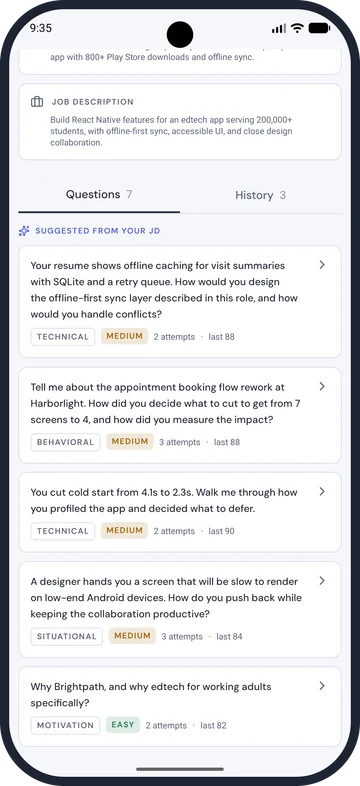
Paste the description in and the question set comes from that role — a mix of behavioral, technical, situational, motivational, analytical, and where the job calls for it, system design and product sense.
Questions from your posting, and what comes back
How practising a question works
Pick a question and answer it
Out loud, aiming for 60 to 90 seconds. The first attempt is usually worse than you expect, which is the useful part.
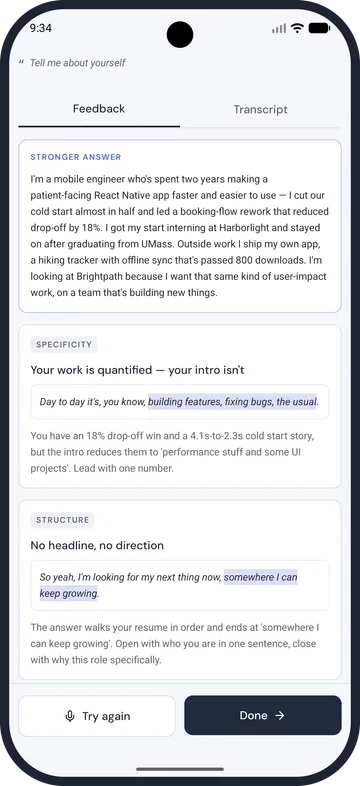
See what was actually weak
Your pace against a 130–160 target, your filler count, where you paused, and whether you gave a real example or talked around it.
Run it again
Same question, knowing what went wrong. The scorecard shows the change from your average on that question, so improvement is a number rather than a feeling.
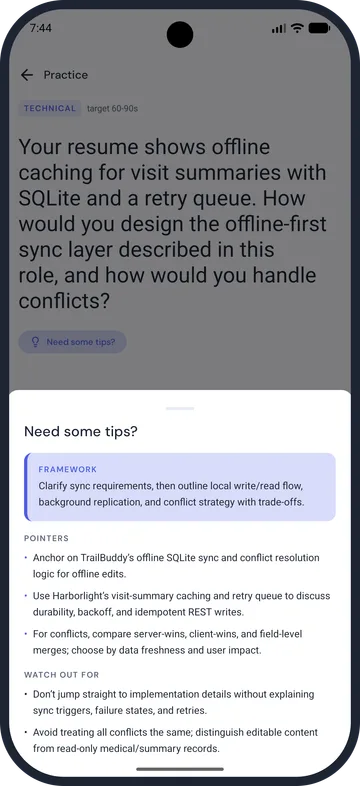
Turn the tips off
Hints help while you're learning the shape of a good answer. Switch them off for a no-help run when you want an honest read.
The questions worth drilling
The ones everyone fumbles
"Tell me about a time you failed." "What's your greatest weakness." Predictable, asked constantly, and still answered badly because nobody rehearses them aloud.
The ones from your posting
The responsibilities listed in the job description, turned into the questions a hiring manager would build from them.
The one you keep avoiding
There's usually a gap between the resume and the role that you're hoping won't come up. It comes up. Practise that one first.
Common questions
- How is this different from reading practice questions online?
- A list of questions tests whether you know what to say. Practising out loud tests whether you can say it — at a normal speed, in order, while slightly nervous. Those turn out to be different skills, and only one of them gets tested in the room.
- Are the questions specific to my job?
- Yes. You paste the job description and the questions are built from it, so you get the mix that role actually calls for rather than the same twenty generic ones everybody practises.
- Can I practise the same question repeatedly?
- That’s the point. Answer it, read what was weak, answer it again. The score moving between run one and run three is the clearest signal you’re getting better rather than just feeling better.
- Can I turn off the hints?
- Yes. Tips can guide you while you’re learning the shape of an answer, and you can switch them off for a realistic no-help run when you want to know where you really stand.
Start with a free mock
A full round and the report that comes with it, before you decide whether to drill anything.
Get Verbaly on Google PlayHow a full mock works · What's free · What interviewing with AI is like